
Description
Présentation du produit
“Vegan” describes what is absent from a material, not how it behaves. Two rolls can both be called vegan — one is PVC softened with phthalate plasticiser, the other is polyurethane on a microfiber base — and they will not age the same way on a bag. One hardens and splits at the gusset fold in a cold store; the other keeps its hand and takes an edge paint.
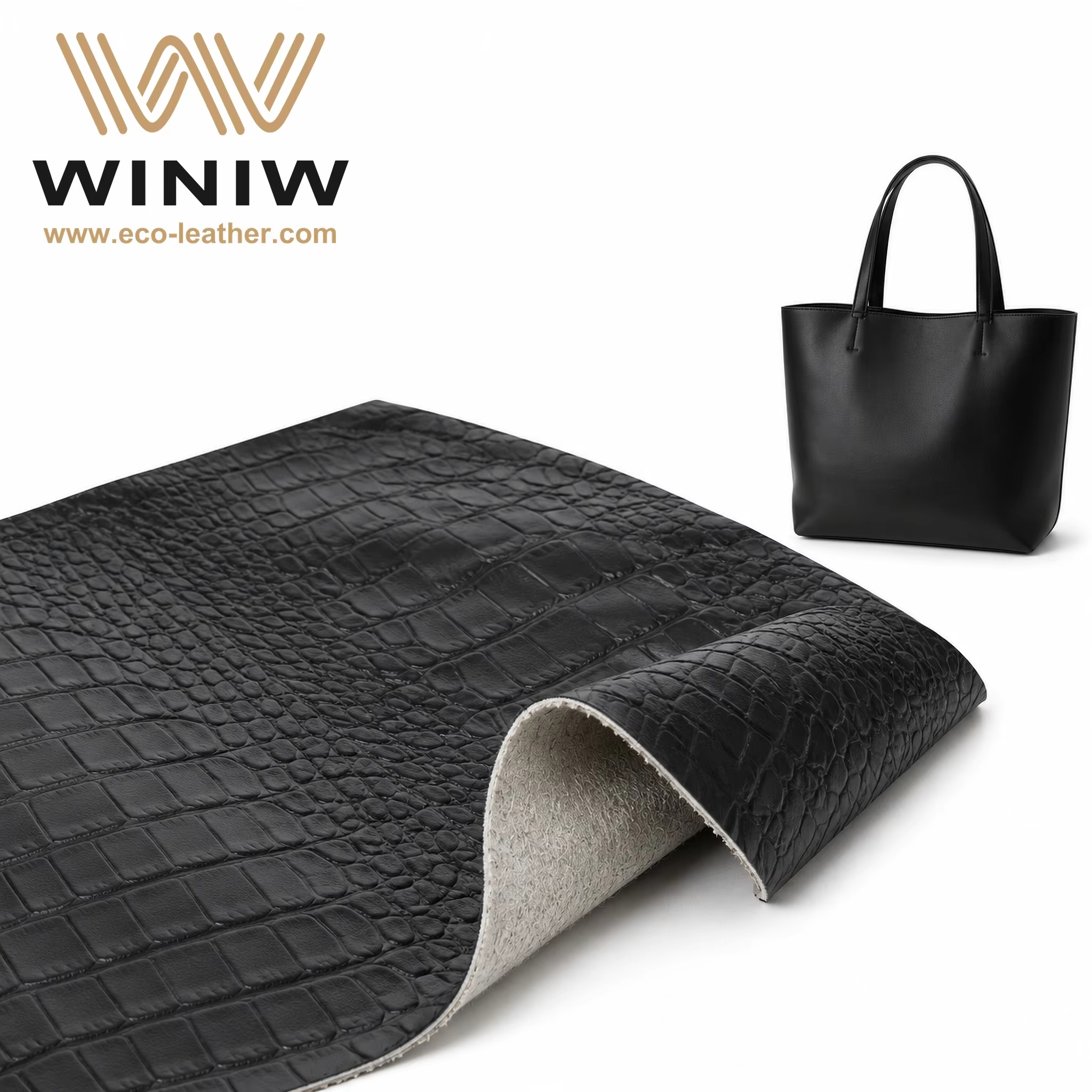
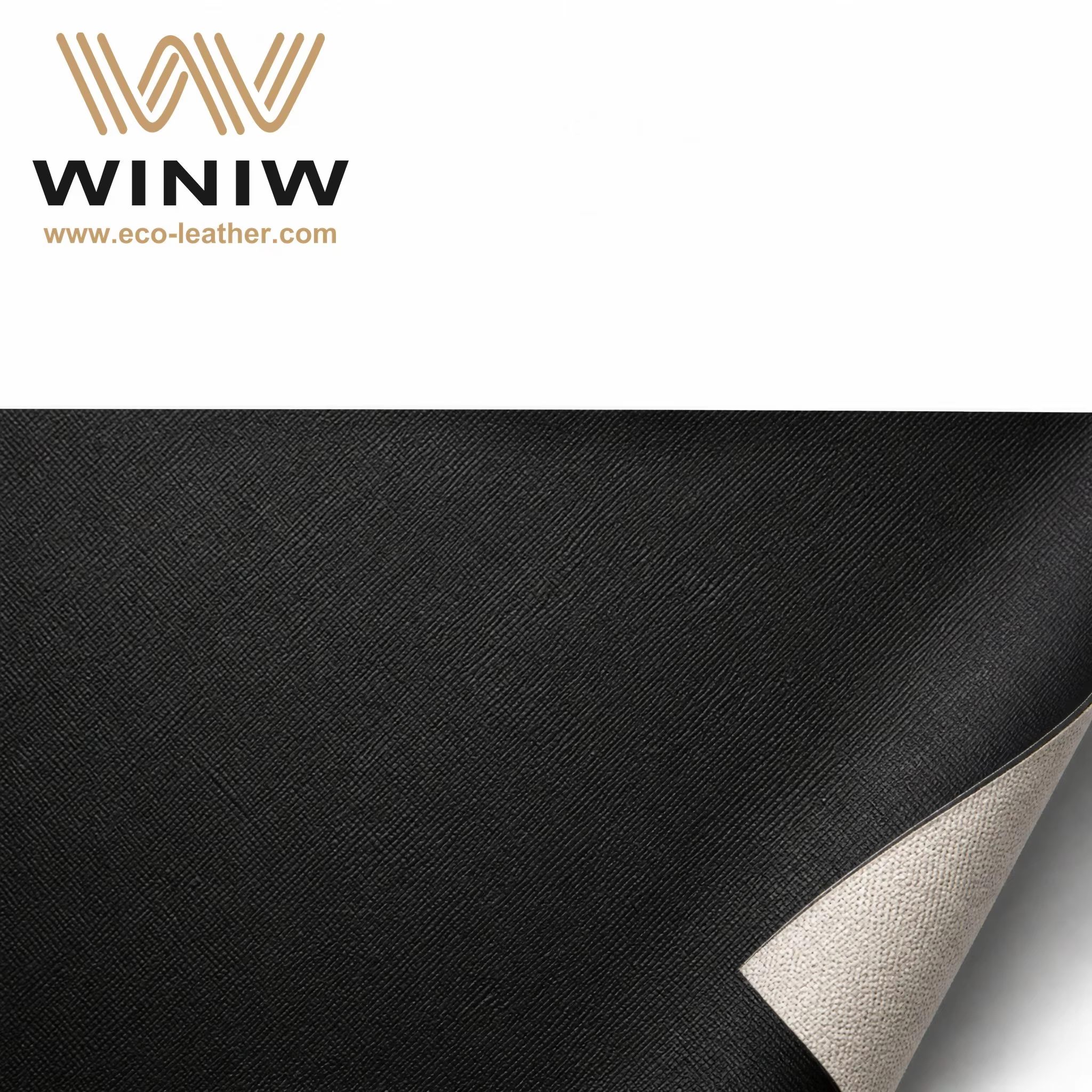
Vegan Leather-What we supply is the second type: a PU topcoat on woven polyester or microfiber backing, 0.8 mm for soft bodies and 1.0 mm for structured shapes, embossed with a registered plate so panel patterns line up across a seam.
Paramètres du produit
Product Feature and Application
-
PVC-Free Is the First Specification, Not a Badge
A “vegan” bag can still be PVC, and PVC brings chlorine chemistry plus a plasticiser that migrates into lining and hardware over time. Ask for the polymer, not the label. If the answer is PVC, the material will also be the heaviest option on the table and the least likely to pass a European brand’s restricted substance list.
-
Edge Paint Is Where the Bag Fails
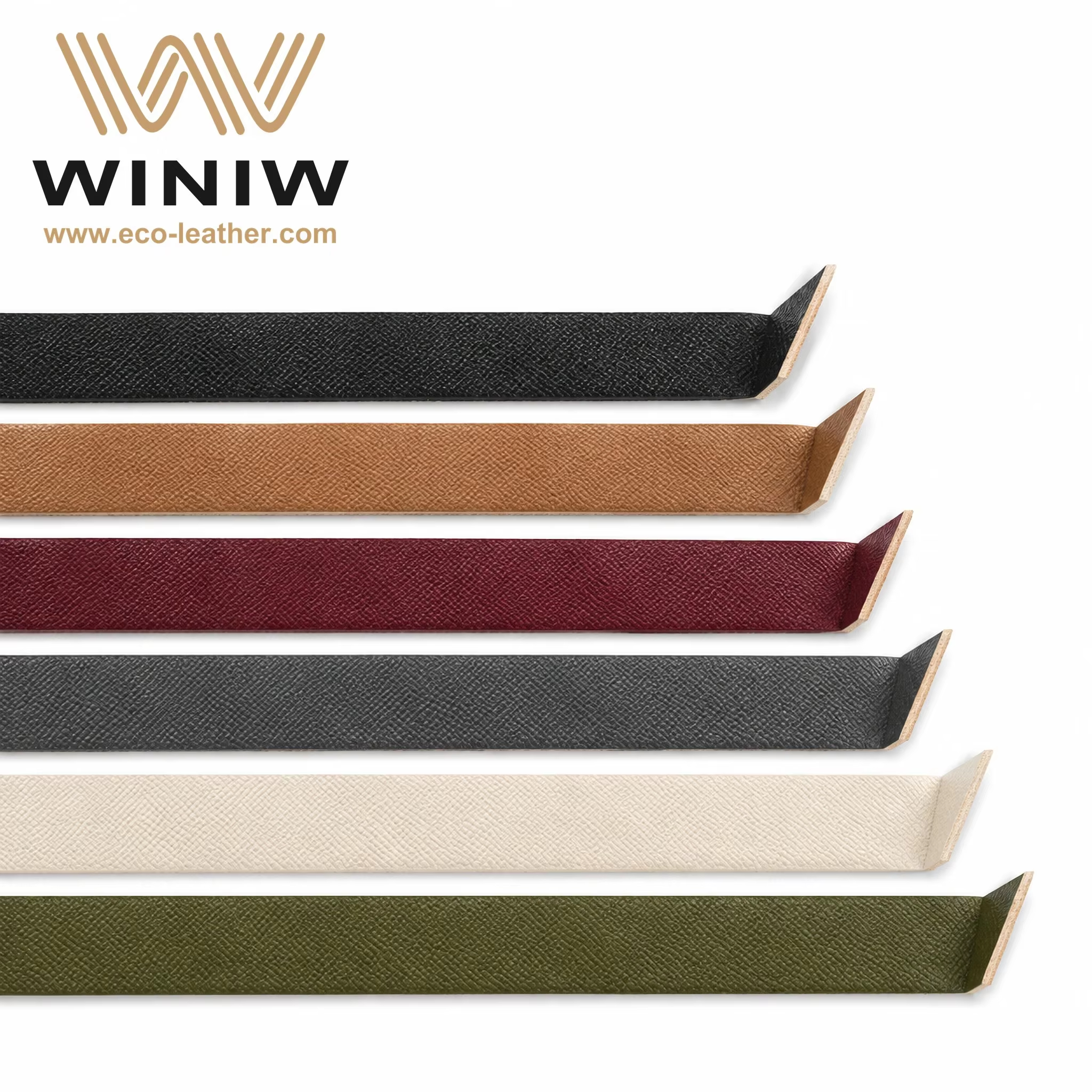
Painted edges peel for one reason: the paint never bonded, because the surface energy was too low or the surface was contaminated with silicone or release agent. We declare dyne level per lot instead of leaving it to chance, and the sampling step is done with your paint, on your edge thickness, not ours. Corona treatment and a primer both work; the primer is the cheaper insurance on croc emboss, where the valleys are hard to treat evenly.
-
Colour That Stays on the Bag
A shoulder bag touches a white shirt for eight hours a day. Dry crocking hides the problem; wet crocking and a 24-hour transfer test at 50 °C expose it. Test the finished shade, because a lab dip can pass while the production lot, with more pigment and a different topcoat, does not.
-
Where a Bag Cracks, and Which Gauge Prevents It
Bags fail at three hinges: the strap root, the top edge of a flap, and the gusset fold. All three are flex-plus-load, and all three are where a 0.8 mm material needs a reinforcement or a heavier gauge. Our rule of thumb: 1.0 mm at the strap root and handle anchors, 0.8 mm for the body, and never a single gauge across a structured shape just to save a cutting layer.
-
Grain Registration and Cutting Yield
Croc and saffiano read as expensive only when the pattern lines up across the front panel, the gusset and the flap. That needs a registered repeat and a width that lets you nest panels without turning the grain. At 137 cm, a standard tote body plus gusset nests with under 12% waste; a 140 cm emboss repeat behaves differently, so the repeat has to be agreed before the plate is cut, not after.
Production Details
- Coating. Two passes on the backing, coat weight low and logged per batch — a heavy coat is cheaper to run and stiffer in the hand.
- Emboss. Registered plate, plate temperature and dwell time recorded, because two degrees changes whether a pebble reads as leather or as vinyl.
- Topcoat. Matte or low-sheen, with the slip additive matched to the emboss depth; a topcoat built for smooth surfaces will dull the valleys of a croc.
- Inspection. Four gates: gauge and GSM, shade under D65 against the approved master, dyne level and peel on a roll-head coupon, and a full-length visual for coating skips, emboss drift and handling marks.
Product Qualification
- REACH SVHC declaration and third-party test reports, matched to the ordered construction
- Phthalate-free statement (6P and 16P), azo-free, APEO-free
- No animal-derived content declaration, issued per shipment for brand compliance files
- ISO 9001 quality management
- Crocking, peel, flex and abrasion reports available for the specific shade on request
A report issued on one colour and gauge does not transfer to another; we issue it per construction rather than per catalogue page.
Deliver, Shipping and Serving
Sampling. 1–2 linear meters free of charge, freight collect; edge-paint and crocking trials can be run on the sample before a PO.
Production. 300 linear meters per colour, 10–20 days after shade approval; custom emboss adds plate lead time, quoted per pattern.
Packing. Roll, PE film plus kraft, roll length and lot number on the label; one splice maximum per roll and flagged, because a splice found at the cutting table stops a line.
Terms. FOB Xiamen, CFR or DDP; T/T 30% deposit. Claims on shade or lot are handled within 15 days of arrival against retained samples.

FAQ
- Is vegan leather always PVC-free?
No. “Vegan” only says no animal material was used; PVC qualifies. Ask which polymer and which plasticiser.
- Will a dark vegan leather rub off onto a white shirt?
It can, and dry crocking will not show it. Ask for wet crocking plus a 24-hour transfer test at 50 °C against white cotton, run on the finished shade.
- Can our edge paint bond to it?
It can, if the dyne level is declared and the sampling is done with your paint. Below roughly 38 dyn/cm most paints need corona treatment or a primer; on croc emboss, use the primer.
- Where will the bag crack first, and what stops it?
Strap root, flap edge, gusset fold. Reinforce or step up to 1.0 mm at those points, and specify flex at −10 °C rather than at room temperature.
- What paperwork proves the vegan claim to a compliance team?
A no-animal-derived-content declaration per shipment, plus REACH SVHC, phthalate and azo statements. Keep them tied to the construction and the lot, not to a marketing page.


