
الوصف
مقدمة المنتج
A purse is not a small handbag. The failure modes are different, and they fail earlier.
On a tote, a 1.0 mm panel is normal. On a wallet, the same 1.0 mm panel becomes a bulge at the fold, a card slot that will not close, and an edge that has to be skived before it can be turned. Small leather goods are built from 0.5–0.8 mm material, folded and turned rather than cut and painted, and the tolerances are in tenths of a millimetre rather than millimetres.
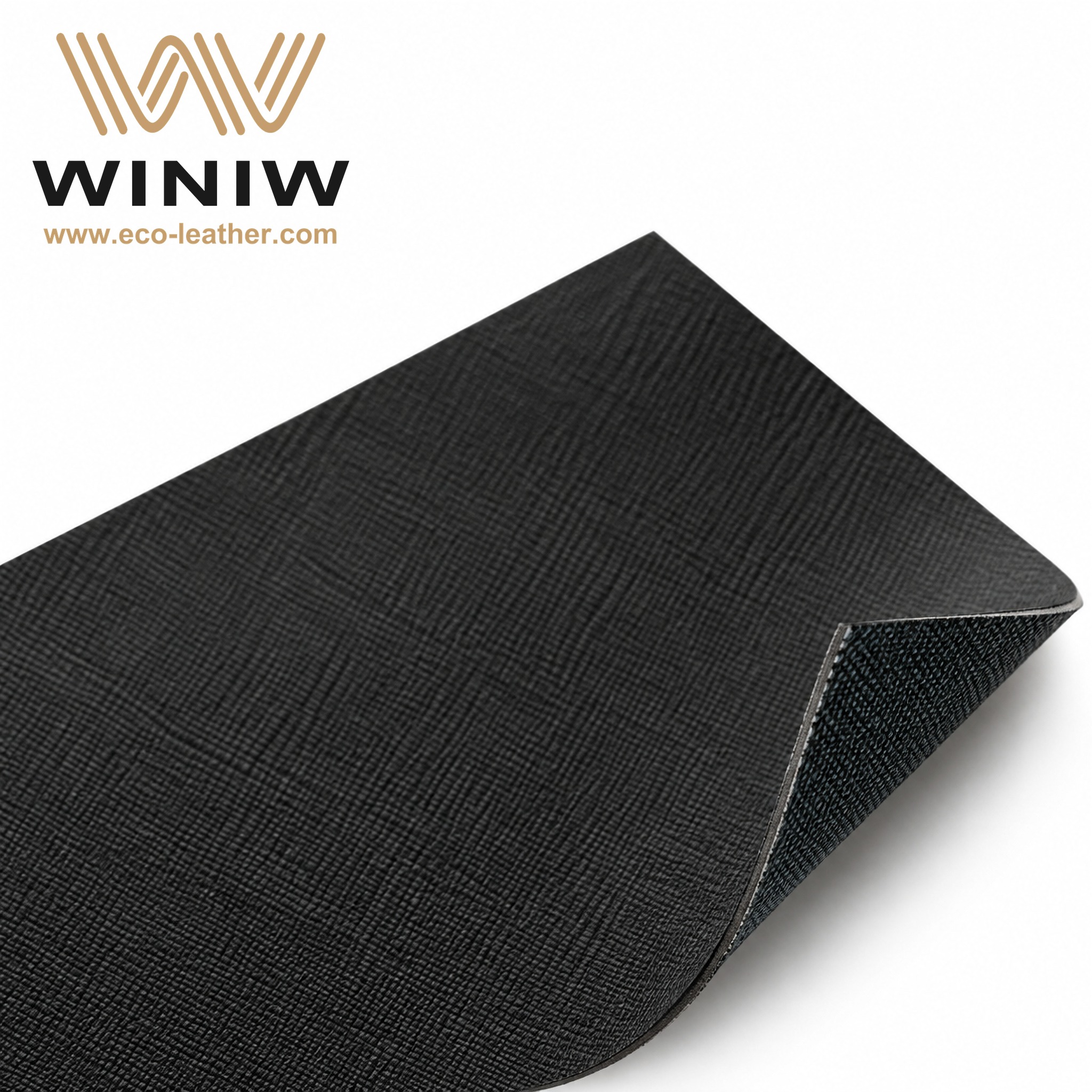
That is what this product is specified for: a thin PU on a woven backing that holds its shape when slit into card slots, turns cleanly at a 4 mm radius, and stays flat across a 200 mm clutch panel. It is the same polymer family as our bag leather, graded down in gauge and re-tensioned for small parts.
What it is not: it is not a leather alternative that behaves like leather at any thickness. Go below 0.5 mm and the material starts to telegraph the backing texture through the topcoat after a season of folding. We will say so rather than sell you a 0.4 mm and let you find out.
معلمة المنتج
Values marked with ≥ or a test name are stated as targets and confirmed against the TDS for the colour you order. Thickness tolerance and dyne target must be fixed on the approved sample, not on the datasheet alone.
Product Feature and Application
Thin Enough To Turn, Stable Enough To Slit
0.6 mm is the working gauge for a turned edge: fold it over 4 mm and the topcoat survives. Below that, the backing weave prints through after a few months in a pocket. The backing on this grade is a tight woven, not a non-woven, because card slots are cut — a loose backing frays at the slit and the fray walks into the card pocket.
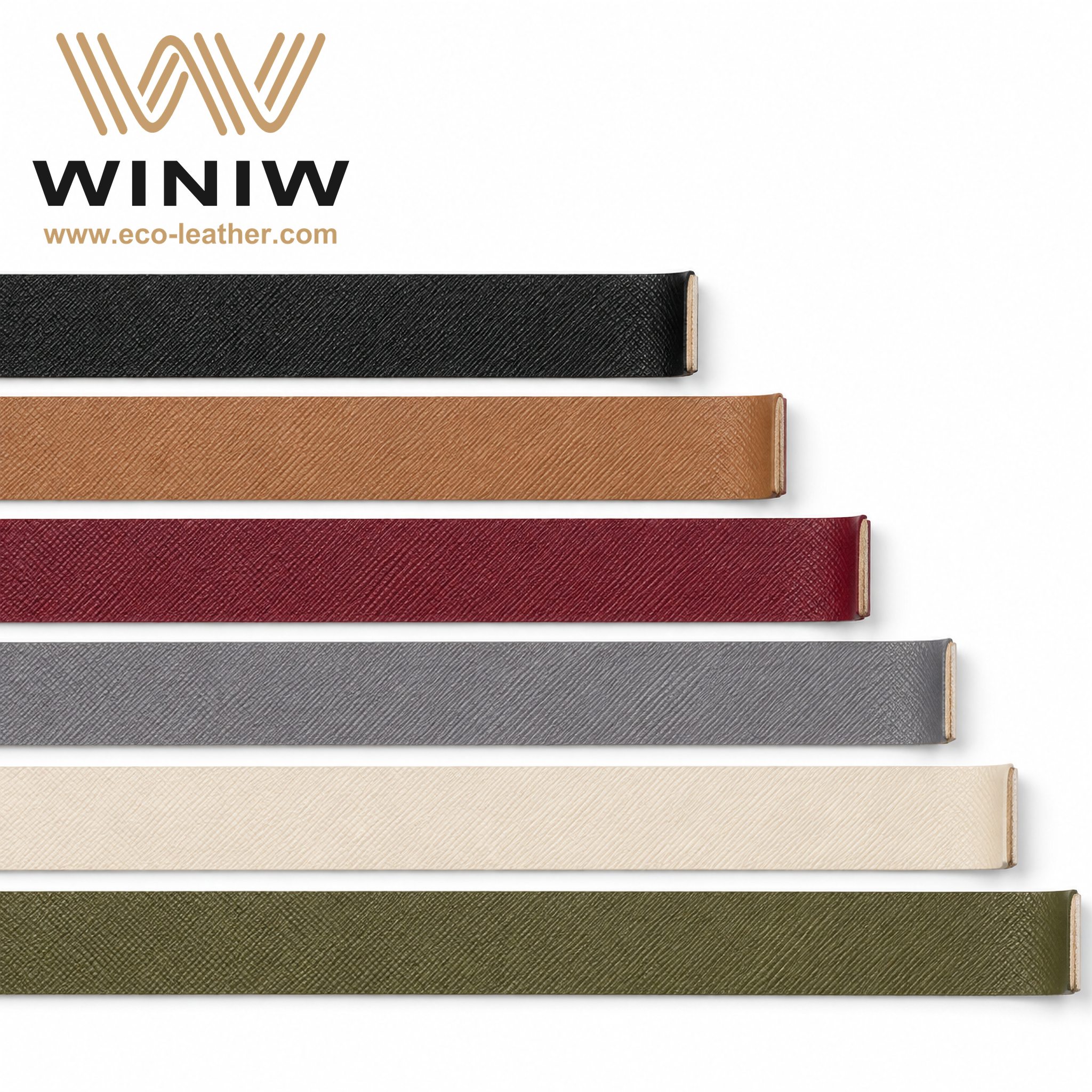
Edge Paint On A 3mm radius
A wallet corner is not a tote corner. The radius is small, the paint film is thin, and one coat will not cover the turn. Ask for a primer plus two coats on a turned edge sample, and test on the radius rather than on a straight run — most paint failures appear at the corner first, then travel along the edge.
Flat Panels, Not Wavy Ones
A clutch is a large flat surface judged at a glance. Wave comes from tension differences in the backing, from roll memory, and from cutting panels across the roll instead of along it. Ask for panels cut in the same direction as the roll and relaxed flat for 24 hours before assembly; check under raking light at 10°, not straight on.
Fasteners Pull Through Small Areas
A snap on a purse flap loads maybe 30 mm² of material. If the backing is loose or the gauge too thin, the socket migrates and the hole elongates. Specify the washer diameter with the gauge, and pull-test on the ordered construction — this is a 30-second test that saves a return.
Ink, Foil And Deboss At Small Scale
Small panels get the logo, and small panels show registration error. Deboss depth, foil adhesion and print edge definition all depend on the topcoat; run your own foil and deboss die on a sample before the PO, because a die that works on 1.0 mm bag leather will cut through a 0.6 mm purse panel.
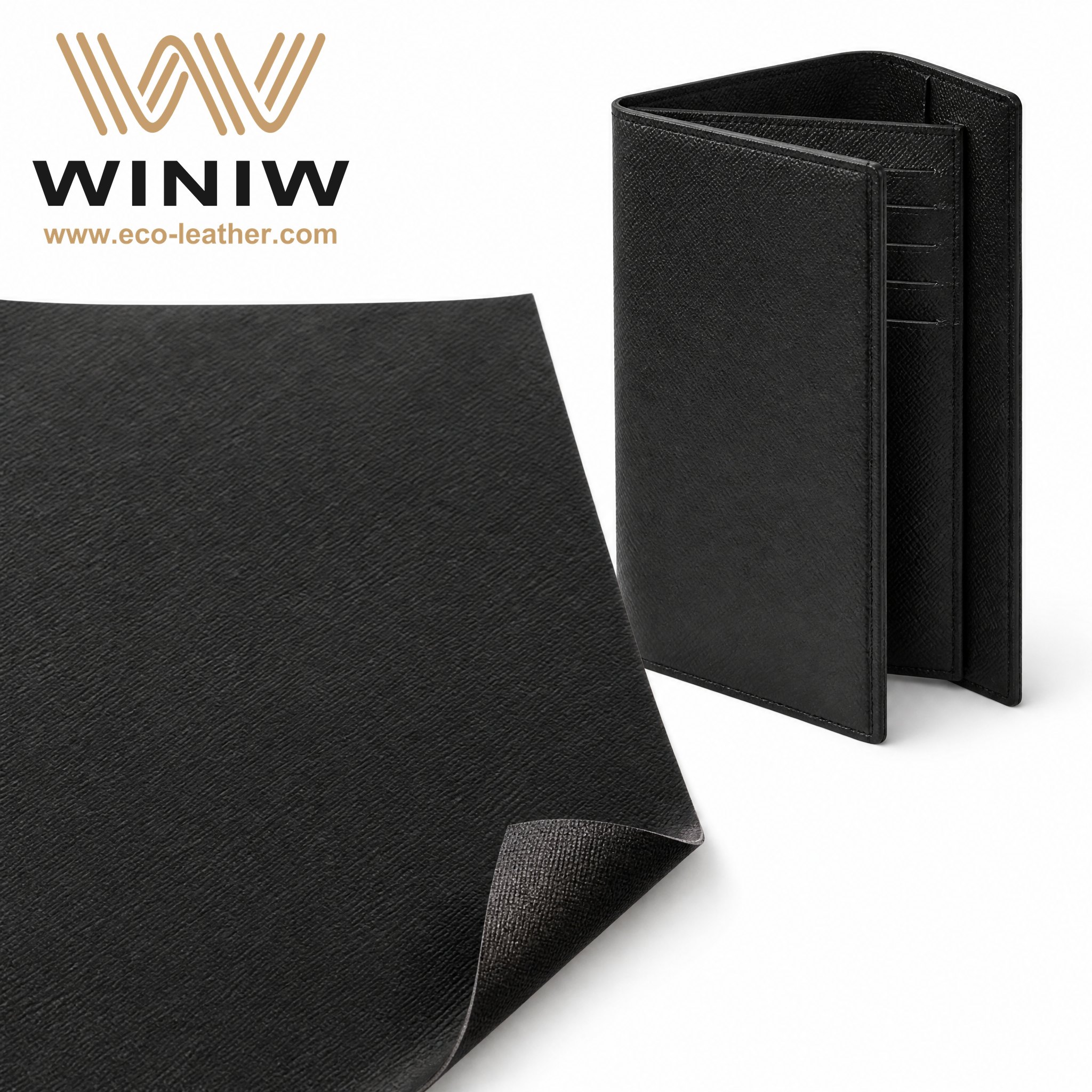
Where it is used: bi-fold and long wallets (0.6 mm, turned edge) · card holders and coin purses (0.6 mm) · frame and box clutches (0.8 mm) · crossbody minis and phone bags (0.8 mm) · luggage tags, passport covers and small leather goods (0.6 mm).
Production Details
Coating. Two passes on the woven backing, coat weight held low enough that a 0.6 mm panel still turns without a crease line at the fold. Coat weight is logged per batch — on thin goods a 10 g/m² drift is visible as stiffness at the fold.
Emboss. Plate pressure is set for the thin gauge. Over-pressure on 0.6 mm flattens the backing weave into the surface, which reads as a dull patch once the panel is turned and lit at an angle.
Inspection. Four gates: gauge and GSM on the roll head, shade under D65 against the approved master, slit and turn-down on a coupon from the same roll, and a full-width visual for coating skips and handling marks at 10° raking light.
Roll-up. Label carries lot, gauge, GSM and length. One splice maximum per roll, flagged on the label; a splice found at the cutting table stops a wallet line for half a shift.
Product Qualification
Documents issued per order: REACH SVHC declaration, RoHS, phthalate content (6P and 16P), azo dye statement, APEO statement, and a declaration that no animal-derived content enters the construction. Abrasion, peel, flex and crocking reports are available for the approved construction.constructionduibiuwi henghekujiushuanshininqinzilaid
One boundary worth stating: a report covers the sample tested, not the colour you order. Black topcoat and white topcoat are different formulations, and crocking figures move between them. Ask for the report on the colour you are buying, or accept the sample-level figure with that caveat written into the spec.
Deliver, Shipping and Serving
Sample: 1–2 meters of the ordered construction, free, freight collect. Turned-edge and slit coupons cut from the same piece on request.
موك: 300 linear meters per colour. Below that, a surcharge applies rather than a refusal — small leather goods programs often start at 100–150 meters and scale after the first season.season is featuerfirdt id lestherwhatmengsuisui,xuqiqinqinovo qaqsihwananasehenhexiangdiuwhuzuju,mendidui,youqishhouxuwomen,youqishihouxu,haizinijiayou,houxuyaoznemegao nidoudenonamze
Lead time: 10–20 days after shade approval; embossed or foiled orders add 5–7 days for plate preparation.
Packing: roll, PE film plus kraft, roll length confirmed on the order. Moisture absorber in the carton for sea freight.
Terms: FOB Xiamen, CFR, or DDP. T/T 30% deposit. Documents: invoice, packing list, CO, test reports on request.
Claims: shade or lot deviation reported within 15 days of arrival, with roll labels and photographs. Keep a 0.5 m reserve sample from each roll — it settles most disputes in one email.
الأسئلة الشائعة
What gauge for a wallet versus a clutch?
0.6 mm for anything with a turned edge — bi-folds, card holders, coin purses. 0.8 mm where the panel holds a shape or takes a frame: box clutches, structured flaps, crossbody minis. Below 0.5 mm the backing texture starts to show through the topcoat at the fold after a season, so we do not quote it for a wallet body.
Will edge paint hold on a corner this tight?
It will if the surface is clean and the radius is respected. Ask for the dyne figure on the roll you receive, use a primer, and build two thin coats rather than one thick one. Test on the corner, not the straight edge — that is where the film is thinnest and where every failure we have seen starts.
Why do thin panels show waves on a clutch?
Three causes, in order of frequency: panels cut across the roll instead of along it, panels assembled before the material has relaxed, and backing tension that varies across the width. Ask for along-roll cutting, 24 hours flat before assembly, and check the roll for tension bands at the edges.
Does the backing fray when card slots are slit?
A tight woven does not, at 3 mm from the slit edge. A non-woven or a loose knit does, and the fray migrates into the card pocket within weeks. This is why we specify the backing by name rather than by weight — the same GSM in two backings behaves differently at the knife.
What decides whether a snap pulls through?
Gauge plus washer diameter. On 0.6 mm, a snap needs a washer sized to spread the load, and the pull-through figure should be quoted in N on the construction you are buying. Test ir:30s


